
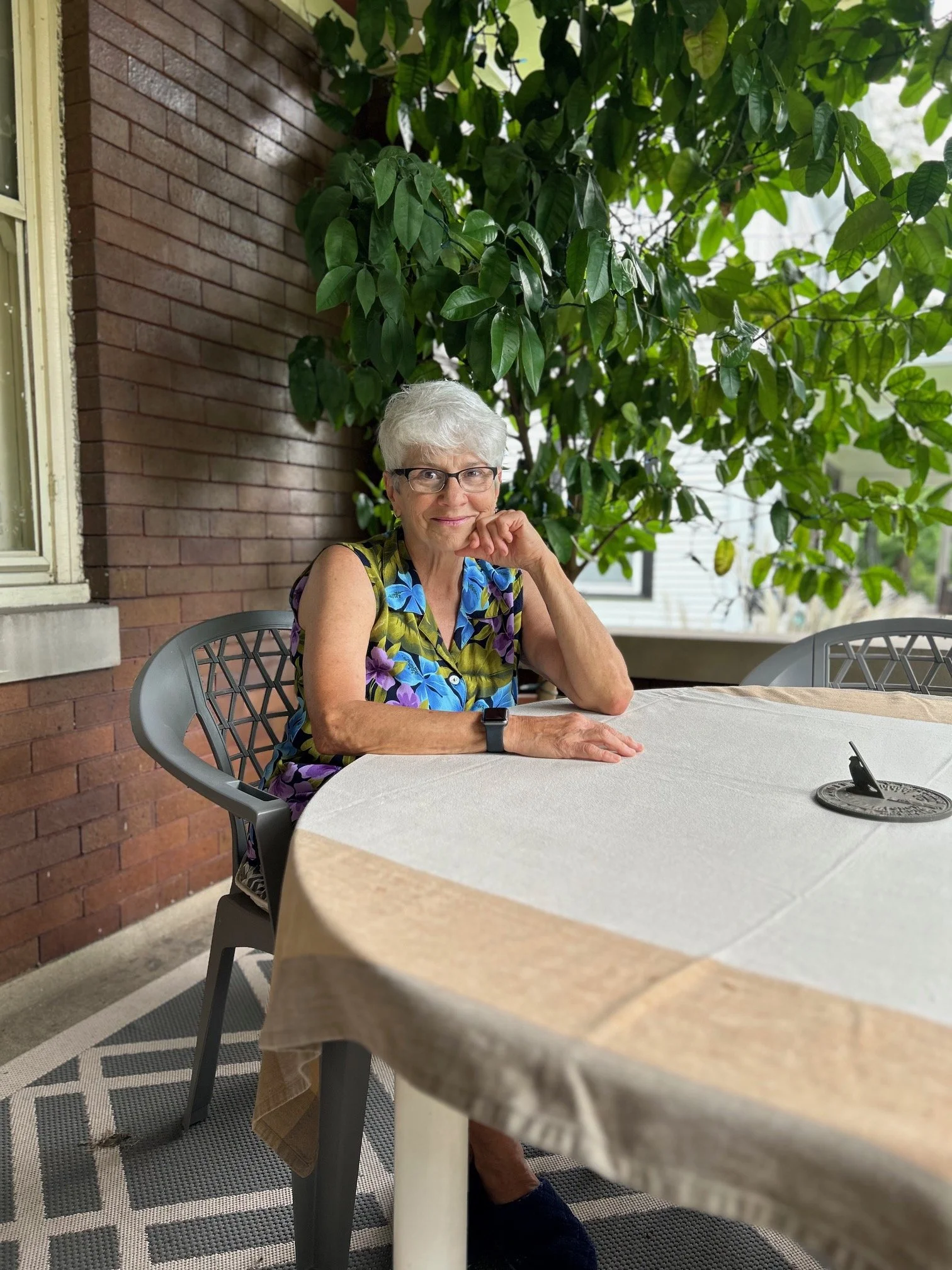
In the early 20th century, Edward and Selma Farnum built a stately American Foursquare at 105 Yale Avenue in Dayton’s historic University Row neighborhood. Constructed between 1907 and 1910, the home still retains the craftsmanship, character and thoughtful details that first drew its current owner, Lisa Spatz, through the front door.
This September, visitors will have a rare opportunity to step inside the home during the 2026 Dayton View Historic District Tour of Homes.
For Lisa, the appeal began before she even entered the house.
“I was immediately drawn to the curb appeal of my home—the porch is deep and as wide as the house,” she said. “Upon entering, the openness, high ceilings and woodwork convinced me I belonged here.”
Those features are hallmarks of the American Foursquare, a style that became popular across the United States during the late 19th and early 20th centuries. Known for their practical layouts, generous porches and strong architectural presence, these homes offered comfort without sacrificing character.
Clever Details from Another Era
Among Lisa’s favorite features are the home’s original doors.
“There are two rooms that have pocket doors,” she said. “There is also a swinging door between the dining room and kitchen. While those features aren’t unique to the period, I find them clever and appealing.”
The house also holds a surprise that cannot be seen from the street. The smallest bedroom, located on the north side of the home, opens onto a private covered balcony.
Hidden Signatures and a Hand-Drawn Roadster
Some of the home’s most fascinating discoveries have been concealed behind walls and layers of wallpaper.
“Craftsmen of that time signed their work,” Lisa explained.
When the home’s original first-floor toilet recently had to be replaced, the exposed wall revealed the plumber’s signature and the date the work was completed.
Years earlier, Lisa uncovered another message from the past while stripping several layers of wallpaper from a closet. The paperhanger had signed and dated his work—but he had also left something more unexpected behind.
“He sketched a roadster on the wall!” she said. “I love their pride in their workmanship.”
These small discoveries offer a personal connection to the people who originally built and decorated the home more than a century ago.
Questions That Remain
Like many owners of historic homes, Lisa still wonders what the house looked like when it was new.
“How did the completed interior look?” she asked. “What was the color palette? What were the wallpaper patterns? Was the garage built later—and, if so, when?”
Some of those answers may remain hidden within the house, waiting to be uncovered by future research or restoration work.
A Home—and Neighborhood—Worth Sharing
Lisa is quick to point out that 105 Yale Avenue was not built as a mansion.
“I think it was very middle class then, and it is also now,” she said.
Yet the home stands within a remarkably varied architectural setting. Before the Traxler Mansion was lost to multiple fires, three mansions stood within the block. Two remain today.
“I look forward to sharing the mix of the entire neighborhood,” Lisa said.
That diversity is part of what makes Dayton View so distinctive. Grand residences stand alongside comfortable middle-class homes, collectively telling the story of how Dayton families lived during the city’s period of tremendous growth.
Renovating While Raising a Family
Lisa’s restoration memories also include a chapter her children are unlikely to forget.
Her two children were 12 years old when the family moved into the house, and renovations continued while they lived there. At one point, the kitchen plumbing had been completely gutted.
“We washed dishes using the garden hose and a galvanized tub on the porch,” Lisa recalled. “Those preteens were appalled and wouldn’t undertake that task until it was dark outside. Ah, good memories!”
Perhaps not for the children at the time—but historic-home restoration has a way of making even the most inconvenient moments become beloved family stories.